
Inflation is the general rise in prices over time. When it happens, each unit of currency buys a little less than before. It is usually gradual, which makes it easy to overlook, but over many years the effect on savings can be significant.
How inflation erodes buying power
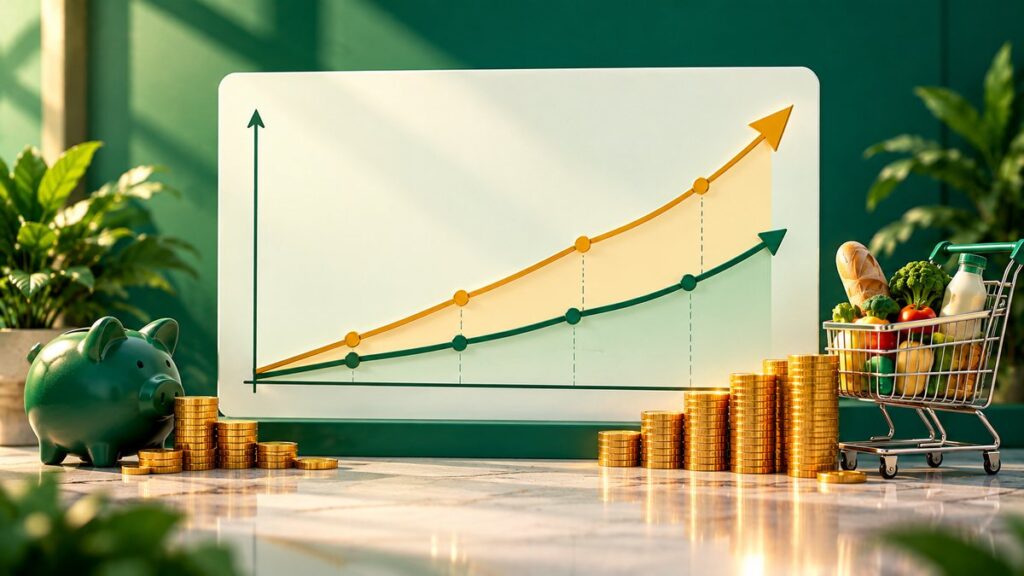
Suppose a basket of groceries costs 100 today. If prices rise by 3 percent a year, the same basket costs about 103 next year and roughly 134 after ten years. Money kept in a cupboard would still be the same amount, but it would buy far less.
Nominal versus real returns
The interest rate you see is the nominal rate. The real return is what remains after inflation. If your savings account pays 4 percent and inflation is 3 percent, your real return is roughly 1 percent. If inflation exceeds your interest rate, your savings lose buying power even as the balance grows.
| Interest rate | Inflation | Approximate real return |
|---|---|---|
| 4% | 3% | About +1% |
| 2% | 3% | About -1% |
| 5% | 6% | About -1% |
What drives inflation?
Economists point to several factors, including strong demand, higher production costs, supply disruptions and expectations about future prices. Central banks often use interest rates to influence it. Causes differ from one period and country to another.
Sensible ways to respond
- Keep cash for what cash is for. Emergency money and short-term goals belong in safe, accessible accounts, even if they lose a little buying power.
- Shop around for rates. A better savings rate can reduce the gap.
- Invest long-term money. Over long periods, diversified investments such as shares have historically tended to outpace inflation, though this is not guaranteed and values can fall in the short run.
- Review your budget. Rising costs may require adjusting categories or raising your savings amount.
- Grow your income. Developing skills and negotiating pay can help your earnings keep pace.
Do not panic
A quick real-return example
Suppose your savings account pays 5% a year and inflation is 7%. Your balance grows by 5%, but prices rise by 7%, so your real return is roughly negative 2%. You have more money in the account, yet it buys slightly less than before. If the account pays 9% and inflation is 7%, your real return is roughly 2%, and your purchasing power grows. The numbers here are illustrations, not forecasts.
This is why checking the interest rate on its own is not enough. Always compare it with the current inflation rate in your country, which is published by your national statistics office or central bank.
Everyday ways to protect your budget
You cannot control inflation, but you can adjust how you respond. Review your budget more often when prices are rising and revise categories that have changed most, such as food and fuel. Compare suppliers for utilities, insurance and mobile plans. Buying staples in bulk when prices are good can help if you have storage space and the items will not spoil.
On the income side, look for ways to grow your earnings over time through skills, promotions or additional work. Keep your emergency fund in a safe place, and consider whether your long-term savings are placed in assets that aim to outpace inflation. A balanced, diversified approach and professional advice can help you decide what suits you.
Reviewing your savings against inflation
Once a year, make a simple list of where your money sits: everyday accounts, short-term savings, emergency fund and long-term investments. Next to each, note the interest or expected return and compare it with the current inflation rate. This quick review shows where your purchasing power may be slipping.
Your emergency fund and short-term needs should stay safe and accessible even if their return is modest, because their job is security rather than growth. For money you will not need for many years, consider whether diversified, growth-oriented assets are suitable, remembering that they can fall as well as rise. Avoid moving everything at once in response to a headline. Make gradual changes, keep costs low and review again next year. If the topic feels complicated, a licensed adviser can help you build a plan that fits your needs.
Moderate inflation is a normal feature of most economies. The goal is not to chase dramatic fixes but to avoid leaving long-term money idle and to keep your plan flexible. Understanding the real value of money helps you set better goals and make calmer decisions.
Frequently asked questions
What is inflation in simple terms?
It is the general rise in prices over time, which means each unit of money buys less than before.
How does inflation affect my savings?
If your savings earn less than inflation, their purchasing power falls even though the balance may grow.
What is a real return?
It is your return after taking inflation into account. It shows whether your money's buying power actually grew.
Should I invest because of inflation?
Long-term money is often placed in growth-oriented assets to aim to outpace inflation, but investing involves risk. Keep short-term needs safe and speak with a licensed adviser if unsure.